태터데스크 관리자

도움말
닫기
적용하기   첫페이지 만들기

태터데스크 메시지

저장하였습니다.

Art & Story

블로그 이미지
Art&Story

Article Category

분류 전체보기 (672)
Exhibition (411)
History of Arts (69)
Contemporary Art (3)
Art Link (63)
Art News (14)
Resource (90)
For Kids (12)
treasure (10)
art show (0)
, (0)

Recent Trackback

Calendar

«   2012/02   »
      1 2 3 4
5 6 7 8 9 10 11
12 13 14 15 16 17 18
19 20 21 22 23 24 25
26 27 28 29      

My Link

  • Total240,510
  • Today14
  • Yesterday148
  1. 2010/03/13
    호쿠사이
  2. 2010/02/24
    쟈포니즘
  3. 2010/02/24
    알퐁스 뮤샤
  4. 2010/02/24
    블레이크
  5. 2010/02/24
    고야
  6. 2010/02/24
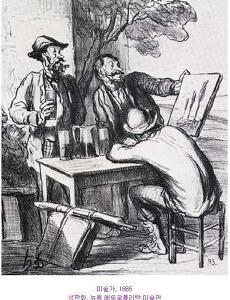
    오노레 도미에
  7. 2009/08/13
    낭만주의- Dante Gabriel Rossetti(1828 –1882)
  8. 2007/12/04
    Toulouse-Lautrec, Henri de
  9. 2007/12/03
    Modigliani, Amedeo
  10. 2007/12/03
    German Expressionism (1)


Trackback 0 and Comment 0

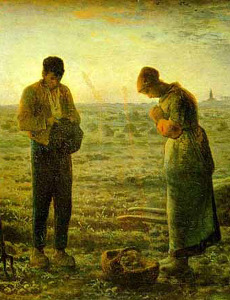
1, 사진술: 우연한 광경과 예기치 않은 각도가 가지는 매력을 발견.
2. 일본의 채색 목판: 새로운 소재와 참신한 색채구성이라~ 확실히 그들과는 다른 모습이다. 이것은 순전히 서양사람들이 본 오리엔탈리즘에 관한 이야기다. 그들은 일본 작품의  우연적이고 파격적인면을 즐겼다.


인상파 영향


일본 영향

Trackback 0 and Comment 0

Trackback 0 and Comment 0


사용자 삽입 이미지
사용자 삽입 이미지
사용자 삽입 이미지
Trackback 0 and Comment 0

Trackback 0 and Comment 0

Trackback 0 and Comment 0

Dante Gabriel Rossetti. Ecce Ancilla Domini ("The Annunciation"). 1850. Oil on canvas. Tate Gallery, London, UK.
Trackback 0 and Comment 0

Toulouse-Lautrec, Henri de (1864-1901). Many immortal painters lived and worked in Paris during the late 19th century. They included Degas, Cézanne, Gauguin, Van Gogh, Seurat, Renoir, and Toulouse-Lautrec. Toulouse-Lautrec observed and captured in his art the Parisian nightlife of the period.

Henri de Toulouse-Lautrec was born on Nov. 24, 1864, in Albi, France. He was an aristocrat, the son and heir of Comte Alphonse-Charles de Toulouse and last in line of a family that dated back a thousand years. Henri's father was rich, handsome, and eccentric. His mother was overly devoted to her only living child. Henri was weak and often sick. By the time he was 10 he had begun to draw and paint.

At 12 young Toulouse-Lautrec broke his left leg and at 14 his right leg. The bones failed to heal properly, and his legs stopped growing. He reached young adulthood with a body trunk of normal size but with abnormally short legs. He was only 1.5 meters tall.

Deprived of the kind of life that a normal body would have permitted, Toulouse-Lautrec lived wholly for his art. He stayed in the Montmartre section of Paris, the center of the cabaret entertainment and bohemian life that he loved to paint. Circuses, dance halls and nightclubs, racetracks--all these spectacles were set down on canvas or made into lithographs.

Toulouse-Lautrec was very much a part of all this activity. He would sit at a crowded nightclub table, laughing and drinking, and at the same time he would make swift sketches. The next morning in his studio he would expand the sketches into bright-colored paintings.

In order to become a part of the Montmartre life--as well as to protect himself against the crowd's ridicule of his appearance--Toulouse-Lautrec began to drink heavily. In the 1890s the drinking started to affect his health. He was confined to a sanatorium and to his mother's care at home, but he could not stay away from alcohol. Toulouse-Lautrec died on Sept. 9, 1901, at the family chateau of Malrome. Since then his paintings and posters--particularly the Moulin Rouge group--have been in great demand and bring high prices at auctions and art sales.

사용자 삽입 이미지
Alone
1896; Oil on board, 31 x 40 cm; Musée D'Orsay, Paris
사용자 삽입 이미지
Ambassadeurs: Aristide Bruant
1892; Lithograph in six colors (poster), 141 x 98 cm; Private collection
사용자 삽입 이미지
Moulin Rouge: La Goulue
1891; Lithograph in four colors (poster), 191 x 117 cm; Private collection
사용자 삽입 이미지
Rosa La Rouge - À Montrouge
1886-87; Oil on canvas, 72.3 x 49 cm; Barnes Foundation, Merion, Pennsylvania
사용자 삽입 이미지
At the Moulin Rouge
사용자 삽입 이미지
La Goulue Arriving at the Moulin Rouge with Two Women
1892; Oil on cardboard, 79.4 x 59 cm; The Museum of Modern Art, New York

사용자 삽입 이미지
Reclining Nude
1897; Oil on wood panel, 12 x 15 1/2 in; Barnes Foundation
사용자 삽입 이미지
The Toilette
1896; 67 x 54 cm; Musée D'Orsay, Paris
사용자 삽입 이미지
Yvette Guilbert Greeting the Audience
1894; Oil over reproduction on photographic paper, 48 x 28 cm; Musée Toulouse-Lautrec, Albi
사용자 삽입 이미지
La Gitane (The Gypsy)


1900; Lithograph in four colors, 160 x 65 cm

The poster La Gitane is among Henri de Toulouse-lautrec's most evocative works, as well as one of the rarest. It advertises a never-published play, now lost; its plot can be reconstructed from contemporary reviews that suggest a story line similar to that of Bizet's Carmen, with a sinister and melodramatic twist.

The heroine, Rita, is married to her cousin but betrays him with any man who catches her fancy. Among her casual conquests, the Count de Moreuse refuses to be discarded. He abandons his family and follows Rita to Granada, where, while Rita dances, husband and lover fight and die. The heartless Rita is gleeful and vindictive, as Toulouse-Lautrec shows; the play ends as she steps over the fallen men to flee, laughing with her brother-in-law.

Toulouse-Lautrec's composition captures the sinister interaction in bold silhouettes suggesting harsh theatrical lighting as well as back-alley darkness. This compression of detail is characteristic of Lautrec's work. He is credited with causing the reassessment of the poster as an art form. Posters were made and distributed in Paris from the seventeenth century, but only in the nineteenth was this means of advertising widely practiced by painters. Toulouse-Lautrec's posters are notable for their sophisticated and innovative color. His stark compositions frequently emphasize a single forground figure, a signature of his work. The flat color areas and abstracted shapes strongly reflect influences Toulouse-Lautrec absorbed from Japanese prints he and other contemporary artists studied.

Trackback 0 and Comment 0

Timeline: Artistic Emigres

모딜리아니 부인 쟌느 에퓌테른.

During the early 1900s in Paris, the Italian painter and sculptor Amedeo Modigliani, b. July 12, 1884, d. Jan. 24, 1920, developed a unique style. Today his graceful portraits and lush nudes at once evoke his name, but during his brief career few apart from his fellow artists were aware of his gifts. Modigliani had to struggle against poverty and chronic ill health, dying of tuberculosis and excesses of drink and drugs at the age of 35.

In 1906, Modigliani settled in Paris, where he encountered the works of Henri de Toulouse-Lautrec, Georges Rouault, and Pablo Picasso (in his "blue period") and assimilated their influence, as in The Jewess (1908; private collection, Paris). The strong influence of Paul Cezanne's paintings is clearly evident, both in Modigliani's deliberate distortion of the figure and the free use of large, flat areas of color.

His friendship with Constantin Brancusi kindled Modigliani's interest in sculpture, in which he would continue his very personal idiom, distinguished by strong linear rhythms, simple elongated forms, and verticality. Head (1912; Guggenheim Museum, New York City) and Caryatid (1914; Museum of Modern Art, New York City) exemplify his sculptural work, which consists mainly of heads and, less often, of full figures.

After 1915, Modigliani devoted himself entirely to painting, producing some of his best work. His interest in African masks and sculpture remains evident, especially in the treatment of the sitters' faces: flat and masklike, with almond eyes, twisted noses, pursed mouths, and elongated necks. Despite their extreme economy of composition and neutral backgrounds, the portraits convey a sharp sense of the sitter's personality, as in Moise Kisling (1915; private collection, Milan). A fine example of Modigliani's figure paintings is a reclining Nude (1917; Guggenheim Museum), an elegant, arresting arrangement of curved lines and planes as well as a striking idealization of feminine sexuality.
During the early 1900s in Paris, the Italian painter and sculptor Amedeo Modigliani, b. July 12, 1884, d. Jan. 24, 1920, developed a unique style. Today his graceful portraits and lush nudes at once evoke his name, but during his brief career few apart from his fellow artists were aware of his gifts. Modigliani had to struggle against poverty and chronic ill health, dying of tuberculosis and excesses of drink and drugs at the age of 35.

Modigliani's mannered art

The third great outsider among the émigrés in Paris died all too soon. The Italian Amedeo Modigliani destroyed himself through drink and drugs, driven desperate by his poverty and bitterly ashamed of it. Modigliani was a young man of fey beauty, and his work has a wonderful slow elegance that is unusual, but compelling. Through the influence of the Rumanian sculptor Constantin Brancusi, he fell under the spell of primitive sculpture, especially from Africa. He went on to develop a sophisticated, mannered style built upon graceful, decorative arabesques and simplified forms. It is hard for us to imagine why it did not attract patrons. He is famous now for his elegant, elongated nudes, but it is portraits that are the most extraordinary.

Chaim Soutine (1917; 91 x 60 cm (36 x 23 1/2 in)) whose own art was so off-beat, appeals to Modigliani for what he is bodily and for what he could become spiritually. Soutine rears up out of the frame like a gawky pillar. His nose is brutish in its spread, his eyes asymmetrical, his hair a shaggy mess. All this uncouthness is contrasted by his slender wrists and hands, by an impression we have of a man yearning for a homeland, set upon forming one out of his own substance if no place is provided. There is sadness here, but also determination: the thick red mouth is resolutely closed.

 
사용자 삽입 이미지
Amedeo Modigliani. Portrait of Elena Pavlowski. 1917. Oil on canvas. 64.8 x 48.9 cm. The Phillips Collection, Washington, DC
사용자 삽입 이미지

사용자 삽입 이미지
Girl with Polka-Dot Blouse
1919 (90 Kb); Oil on canvas; Barnes Foundation, Merion, PA
사용자 삽입 이미지
Jeanne Hbuterne Seated in Profile
1918 (80 Kb); Oil on canvas; Barnes Foundation, Merion, PA
사용자 삽입 이미지
Jeanne Hbuterne, Left Arm Behind her Head
1919 (80 Kb); Oil on canvas; Barnes Foundation, Merion, PA
사용자 삽입 이미지
사용자 삽입 이미지
사용자 삽입 이미지
사용자 삽입 이미지
La jeune bonne (The Servant Girl)
c. 1918 (160 Kb); Oil on canvas, 152.5 x 61 cm (60 x 24 in); Albright-Knox Art Gallery, Buffalo, NY
사용자 삽입 이미지
Nude Sdraiato
사용자 삽입 이미지
The Boy
1918; Barnes Foundation, Merion, PA
This painting may also be: Boy with blue waistcoat, 1919; Oil, 92.1 x 60.3 cm; Indianapolis, The John Herron Art Institute, William Roy Adams collection.
Signed in the upper right corner with the inscription CAGNES. Painted during Modigliani's stay in Cagnes. Same boy and pose as on other paintings.
Note: this would indicate the image is probably left-right inverted.
사용자 삽입 이미지
Young Redhead in an Evening Dress
1918 (90 Kb); Oil on canvas; Barnes Foundation, Merion, PA


Trackback 0 and Comment 0
Munch, Edvard

(b. Dec. 12, 1863, Löten, Nor.--d. Jan. 23, 1944, Ekely, near Oslo)
Norwegian painter and printmaker whose intense, evocative treatment of psychological and emotional themes was a major influence on the development of German Expressionism in the early 20th century. His painting The Cry (1893) is regarded as an icon of existential anguish.

A gifted Norwegian painter and printmaker, Edvard Munch not only was his country's greatest artist, but also played a vital role in the development of German expressionism. His work often included the symbolic portrayal of such themes as misery, sickness, and death. The Cry, probably his most familiar painting, is typical in its anguished expression of isolation and fear.

Munch was born on Dec. 12, 1863, in Loten, Norway. He grew up in Christiania (now Oslo) and studied art under Christian Krohg, a Norwegian naturalistic painter. Munch's parents, a brother, and a sister died while he was still young, which probably explains the bleakness and pessimism of much of his work. Paintings such as The Sick Child (1886), Vampire (1893-94), and Ashes (1894) show his preoccupation with the darker aspects of life.

Munch traveled to Paris in 1885, and his work began to show the influence of French painters--first, the impressionists, and then the postimpressionists--as well as art nouveau design. Like many young artists Munch reacted against conventional behavior, and in 1892 he took part in a controversial exhibit in Berlin. His circle of friends included several writers, one of whom was the Norwegian playwright Henrik Ibsen. Munch designed the sets for several of Ibsen's plays.

Between 1892 and 1908, Munch spent much of his time in Paris and Berlin, where he became known for his prints--etchings, lithographs, and woodcuts. After 1910 Munch returned to Norway, where he lived and painted until his death. In his later paintings Munch showed more interest in nature, and his work became more colorful and less pessimistic. Munch died in Ekely, near Oslo, on Jan. 23, 1944. He left many of his works to the city of Oslo, which built a museum in his honor.

노르웨이 부유한 집안에서 태어난 뭉크는 어머니가 폐결핵으로 사망하고 누나와 세 동생이 병에 걸려 죽거나 입원하고 그 역시 질병에 시달리며 죽음, 불안, 공포, 고통 등 인간 내면 심리세계를 그림.
"나는 숨쉬고 느끼고 사랑하고 고통받는 사람들을 그리고 싶다"
현대 사회 상황에 대한 환멸이나 인간 소외, 갈등 등의 긴장을 강조하는 표현방법, 정신적 고뇌를 상징하는 왜곡된 형태와 강렬한 색채로 심리적 긴장을 비극적으로 표현. 이것은 독일 표현주의의 원동력이 되었다.

사용자 삽입 이미지
The Scream (or The Cry)
1893; 150 Kb; Casein/waxed crayon and tempera on paper (cardboard), 91 x 73.5 cm (35 7/8 x 29"); Nasjonalgalleriet (National Gallery), Oslo
우울한 뭉크가 어느 날 저녁노을의 느낌을  핓빛 하늘속에  알수없는 두려움으로 절규를 하게 만든 그 순간을 그림으로 표현하였다.
사용자 삽입 이미지
Madonna. 1894/95. Oil on canvas. 91 x 70.5 cm. Nasjonalgalleriet, Oslo, Norway
사용자 삽입 이미지
Puberty. 1894. Oil on canvas. 151.5 x 110 cm. Nasjonalgalleriet, Oslo, Norway.
사춘기 소녀의 두려움과 근심.
Edvard Munch. Vampire. 1895-1902. Combined woodcut and lithograph. 38.5 x 55.3 cm. Munch Museum, Oslo, Norway.

사용자 삽입 이미지
Ashes. 1894. Oil on canvas. 120.5 x 141 cm. Nasjonalgalleriet, Oslo, Norway.
Edvard Munch. The Three Stages of Woman (Sphinx). c. 1894. Oil on canvas. 164 x 250 cm. Rasmus Meyer Collection, Bergen, Norway.
인생의 세단계- 소녀에서 여인에서 죽음으로...
마치 중세의 작품처럼, 시간 차이가 있는 사건들을 한  화면에 동시에 그리는 종교미술의 특징을 이용한 것인지, 동일 인물이 3번 등장하며 인생의 단계를 보여준다.
자연의 생성과 소멸처럼 인간의 죽음으로 향한
사용자 삽입 이미지
Self-Portrait: Between Clock and Bed. 1940/42. Oil on canvas. 149.5 x 120.5 cm. Munch Museum, Oslo, Norway.


사용자 삽입 이미지


Edvard Munch. The Death Bed. 1895. Oil on canvas. 90 x 120.5 cm. Rasmus Meyer Collection, Bergen, Norway.


사용자 삽입 이미지
Evening on Karl Johan Street. 1892. Oil on canvas. 84.5 x 121 cm. Rasmus Meyer Collection, Bergen, Norway
사용자 삽입 이미지
Death in the Sick Chamber. 1895. Oil on canvas. 150 x 167.5 cm. Nasjonalgalleriet, Oslo, Norway.
Edvard Munch. The Dance of Life. 1899-1900. Oil on canvas. 125.5 x 190.5 cm. Nasjonalgalleriet, Oslo, Norway.
<삶의 춤>노르웨이는 여름에는 해가 지지않고, 겨울에는 해가 뜨지 않는다. 낮과 밤의 경계도 모호하여 분위기가 칙칙하게 보여진다. 왼쪽의 젊은 여자, 중앙 붉은 여자, 오른쪽 나이든 여자가 한 여인이다...한 화면에 인생의 흐름.


Edvard Munch. Moonlight. 1893. Oil on canvas. 140.5 x 135 cm. Nasjonalgalleriet, Oslo, Norway.

Edvard Munch. The Wave. 1921. Oil on canvas. 100x120 cm. Munch Museum, Oslo, Norway.
Edvard Munch. Nude. c.1913. Oil on canvas. 80 x 100 cm. Munch Museum, Oslo, Norway.
Edvard Munch. The Girls on the Bridge. 1901. Oil on canvas. 136 x 125.5 cm. Nasjonalgalleriet, Oslo, Norway.
Trackback 0 and Comment 1